




Knowledge About Die Casting, Machines and Foundry Technology
The FISS Knowledge Center provides practical technical articles on die casting machines, casting processes, automation, furnace technology and process optimization. We explain technical relationships clearly and show which machines, systems and peripheral equipment are suitable for different production requirements.
From cold chamber and hot chamber die casting to mold filling and vacuum, automated die casting cells and molten metal supply, the articles combine technical fundamentals with practical experience from industrial machinery and foundry applications.
Knowledge
Filtre
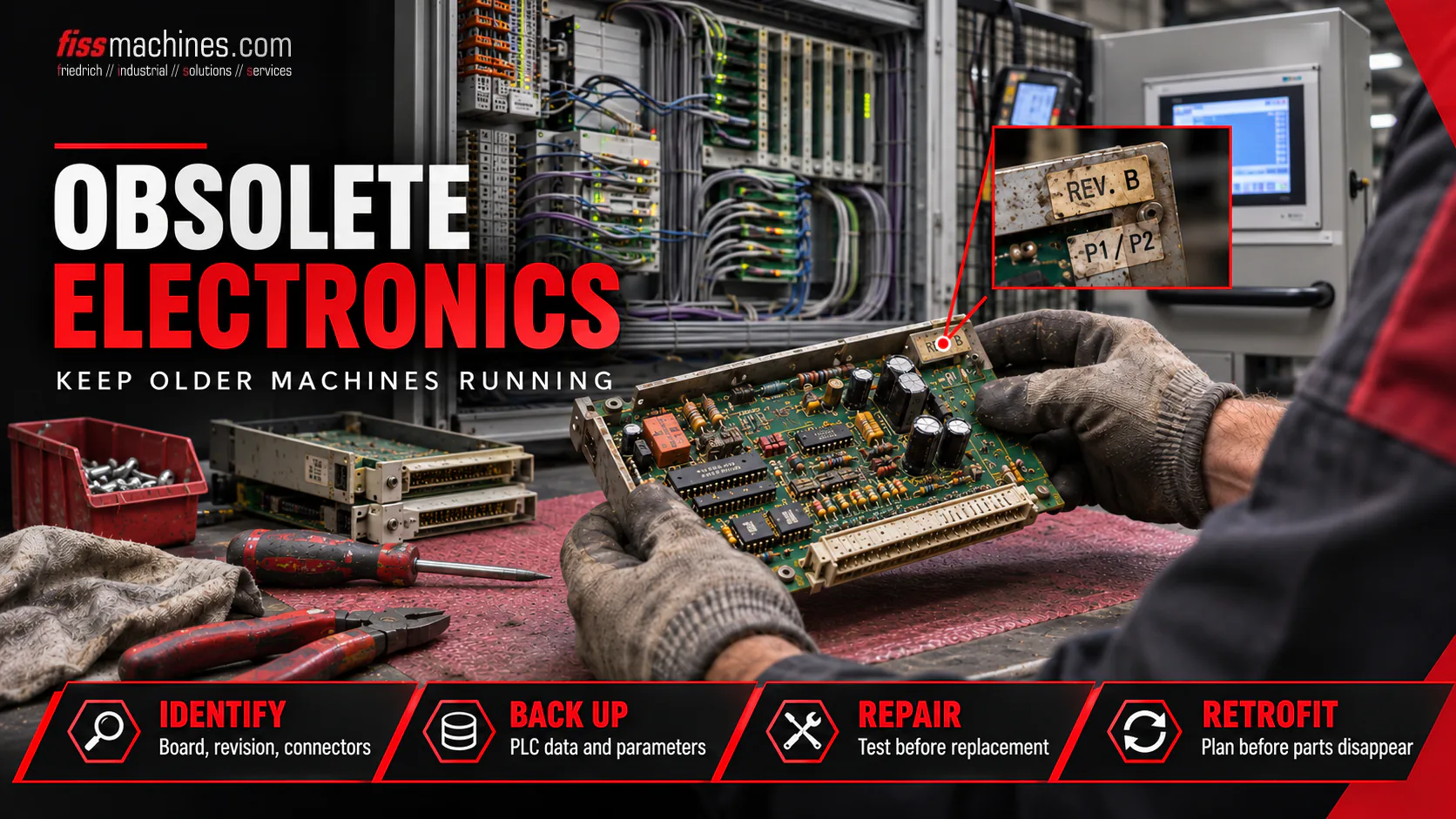
Electronic Spare Parts for Older Foundry Machines: Plug-in Boards, Obsolescence and Repair
16 novembre 2026
Knowledge
The mechanics of an older die casting machine often last for decades – the control electronics do not. This article shows how foundries assess obsolescence, secure spare parts and plug-in boards, and when a retrofit becomes unavoidable.
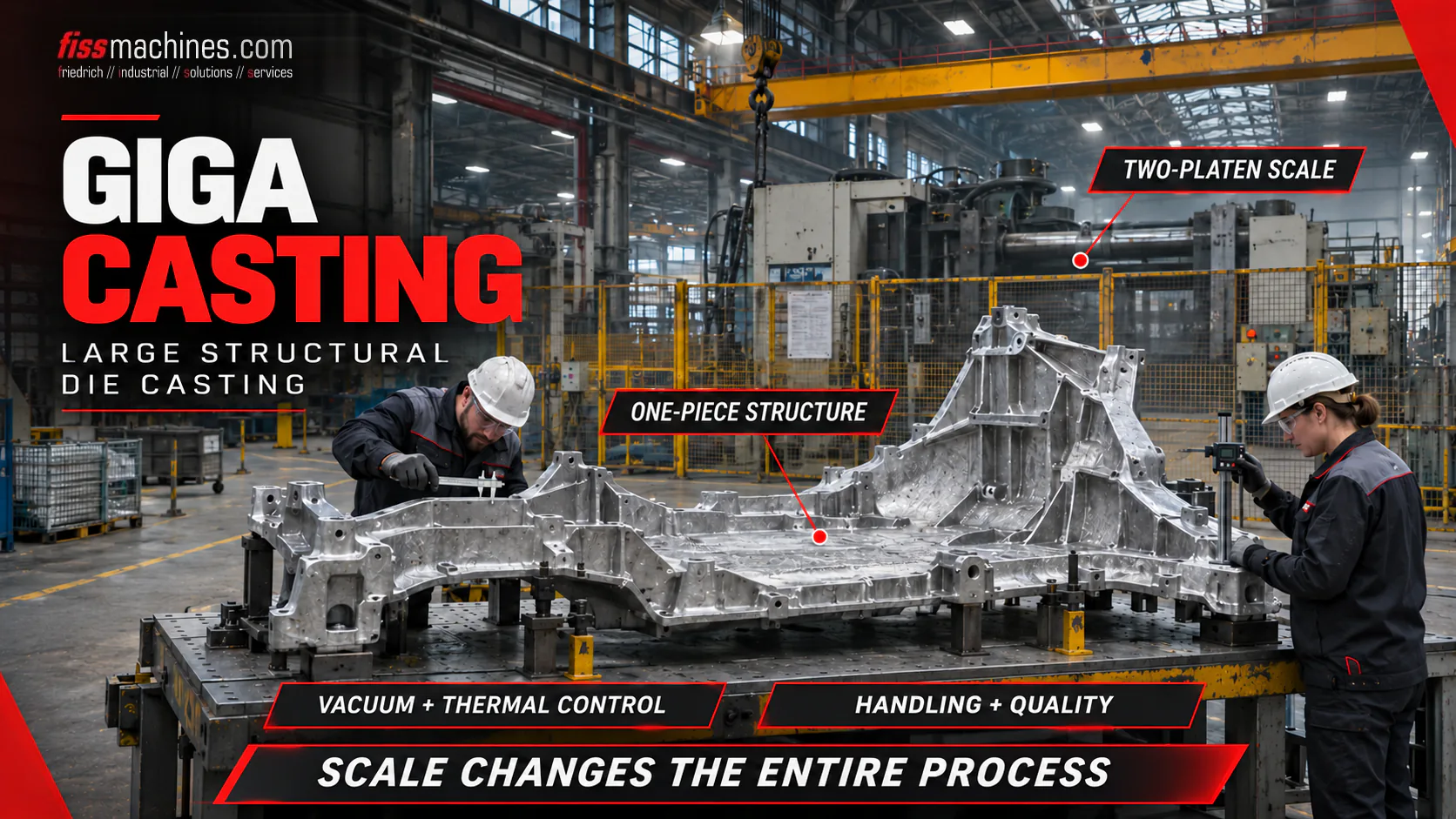
Giga Casting: Large Die Casting Machines for Structural Parts – Technology and Limits
15 novembre 2026
Knowledge
Giga casting replaces dozens of joined body parts with one die casting. This article explains machine sizes, process requirements, quality and repair questions – and who the technology really suits.
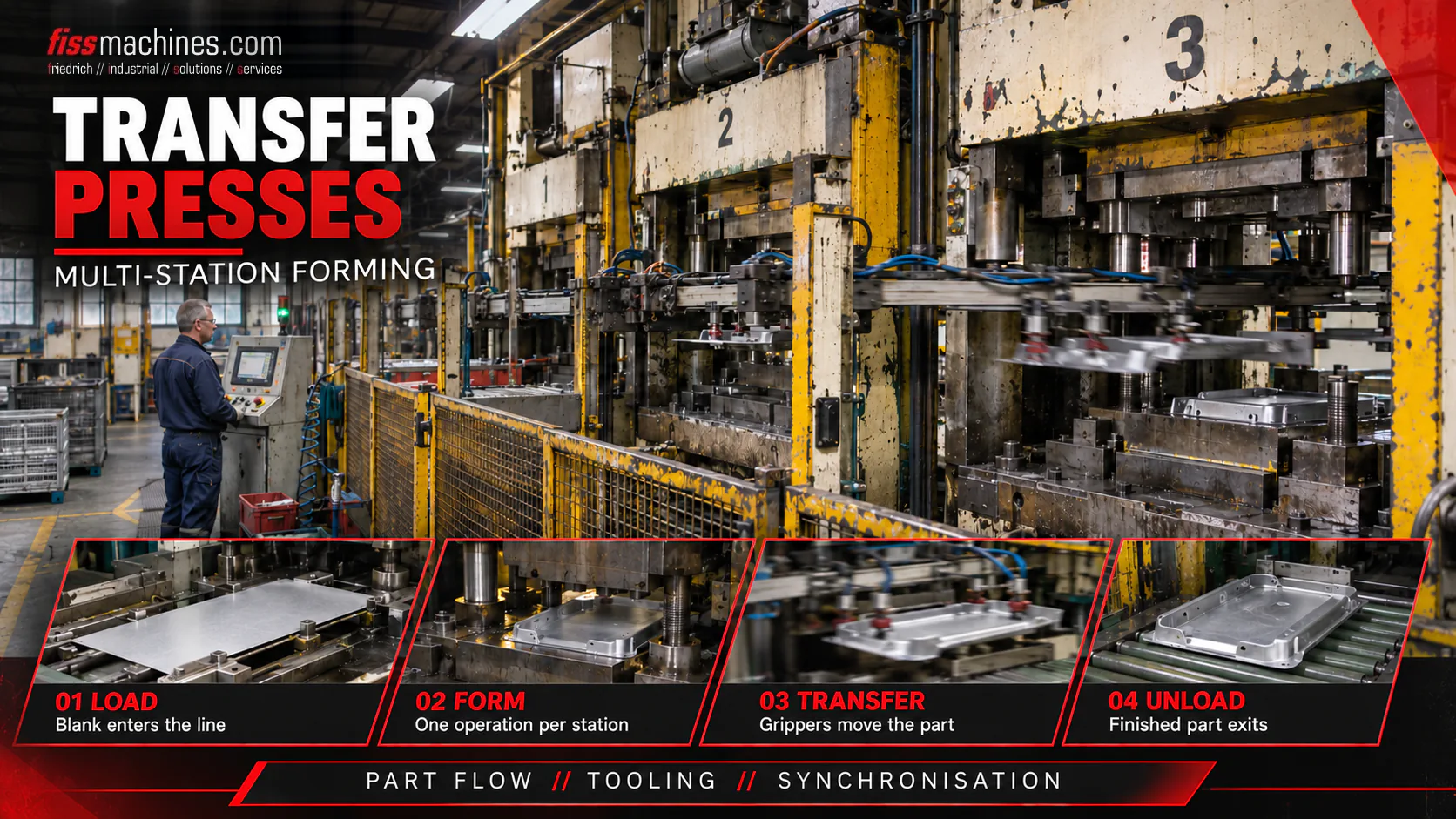
Transfer Presses Explained: Transfer Systems, Applications and Buying Used
14 novembre 2026
Knowledge
A transfer press forms a part in several die stations under one slide while an integrated transfer moves it on. This article compares transfer concepts and shows what to check before buying or relocating a used press.
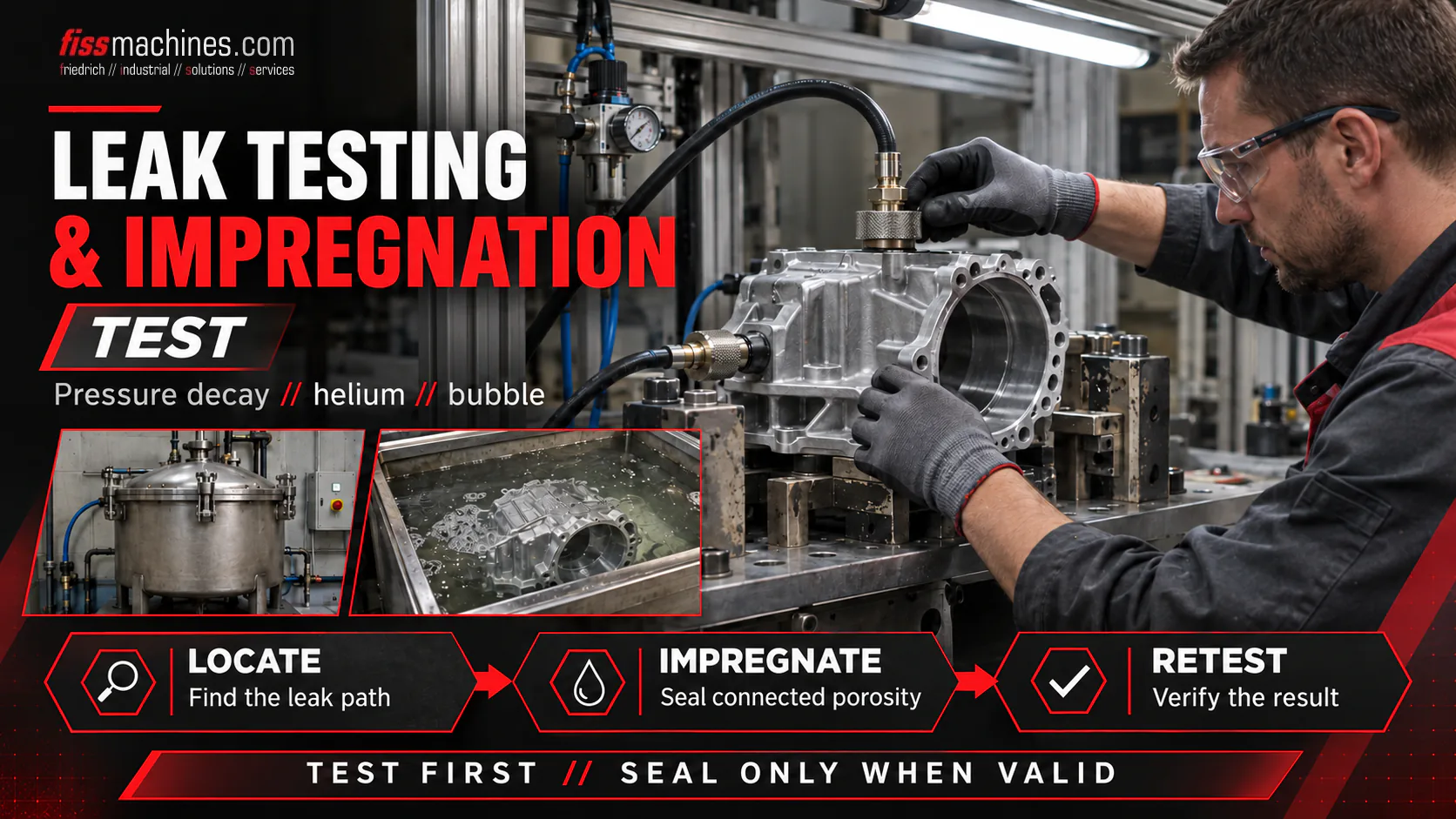
Leak Testing and Impregnation of Die Castings: Methods, Limits and Process Chain
13 novembre 2026
Knowledge
Pump housings, gearbox cases and e-drive housings must be tight. This article compares leak test methods for die castings, explains leak rate units and shows where vacuum impregnation helps – and where it does not.
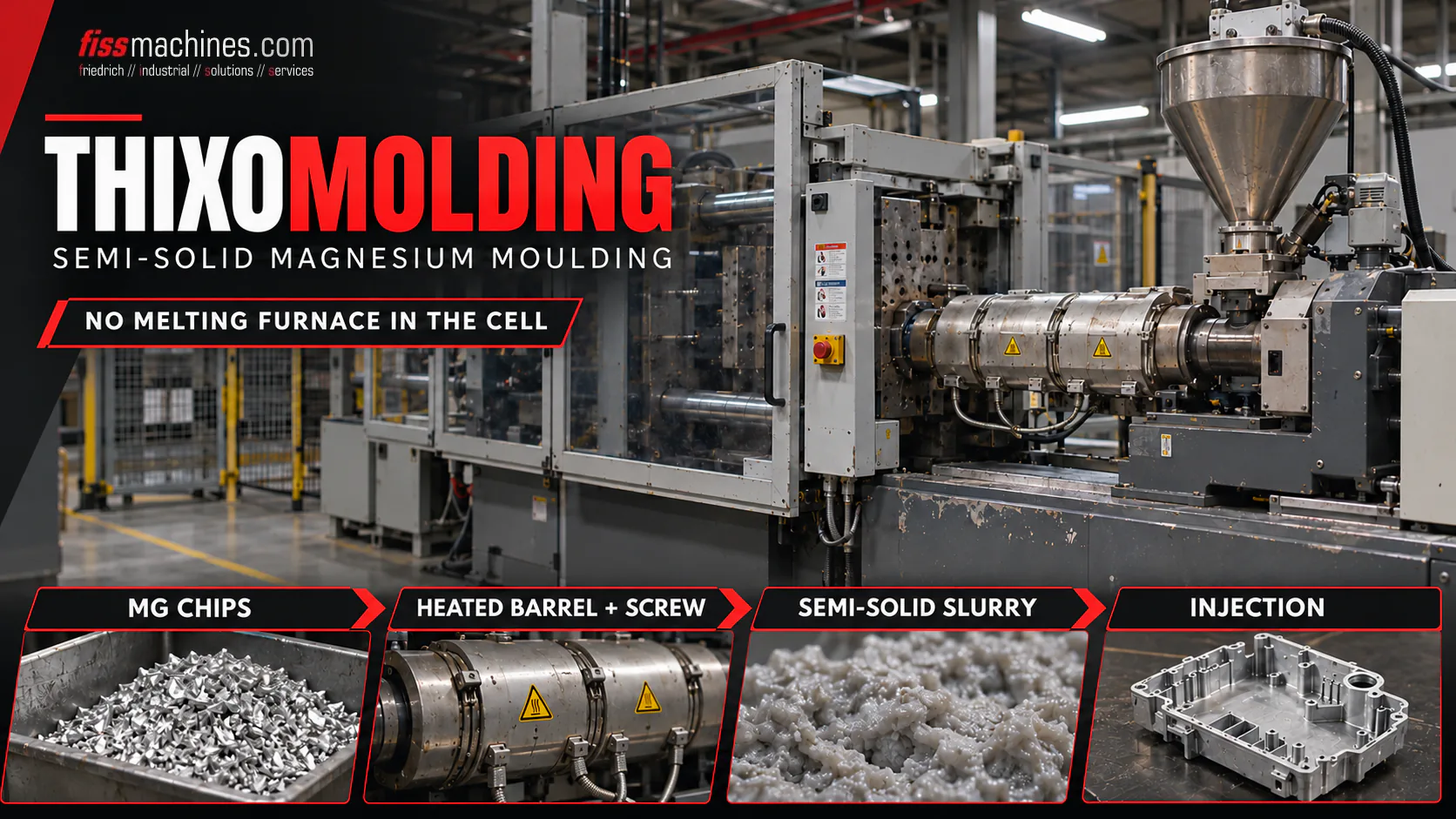
Thixomolding Explained: Semi-Solid Magnesium Moulding Compared with Die Casting
12 novembre 2026
Knowledge
Thixomolding moulds magnesium like a plastic: chips go in, a semi-solid slurry is injected. This article explains the process, compares it with hot-chamber die casting and shows what to check on a used machine.
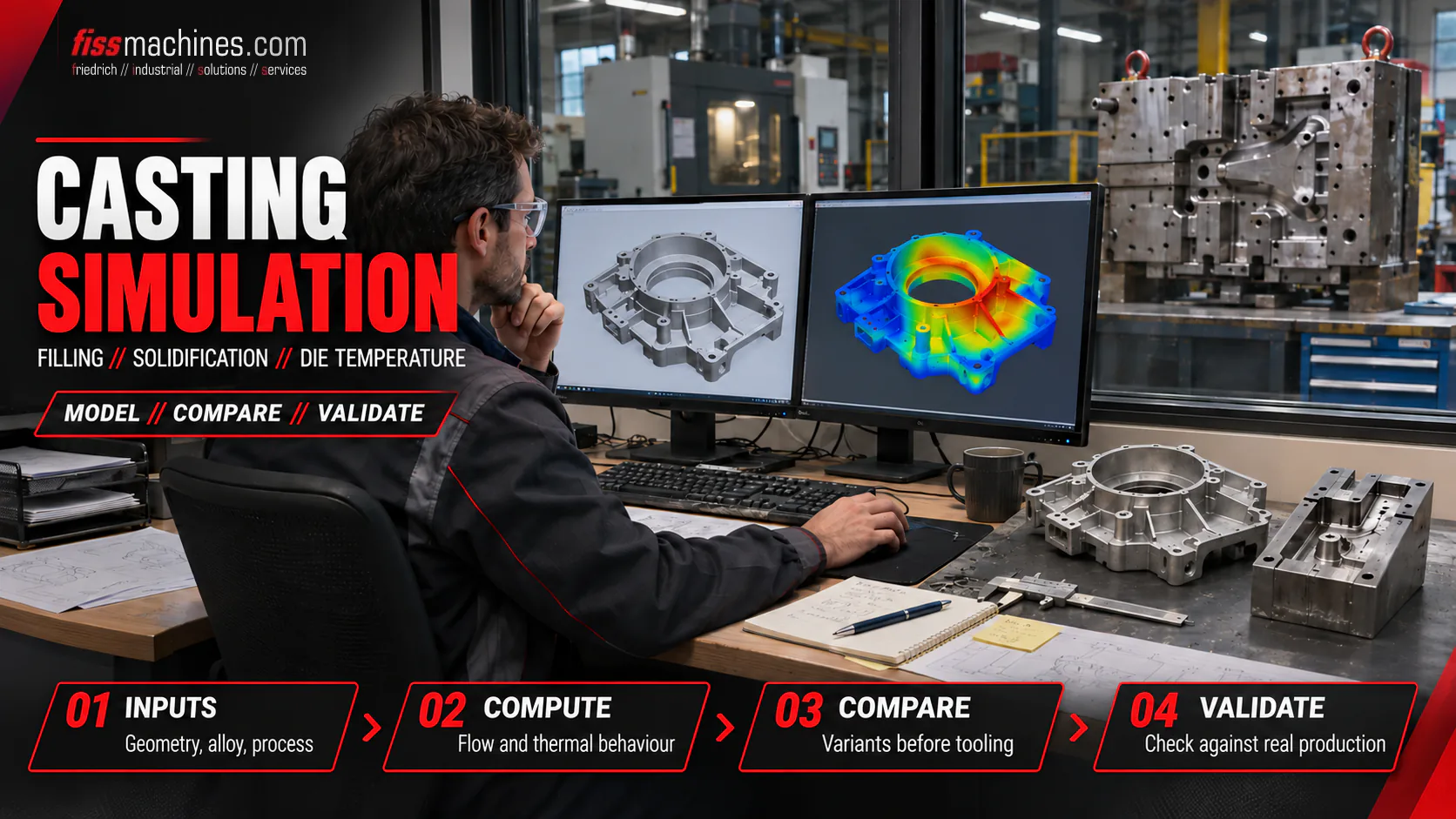
Casting Simulation in Die Casting: What Filling and Solidification Simulation Can Do
11 novembre 2026
Knowledge
Simulation shows where a die casting traps air, runs cold or shrinks before the first die is cut. This article explains what the software computes, which inputs matter and where its limits are.
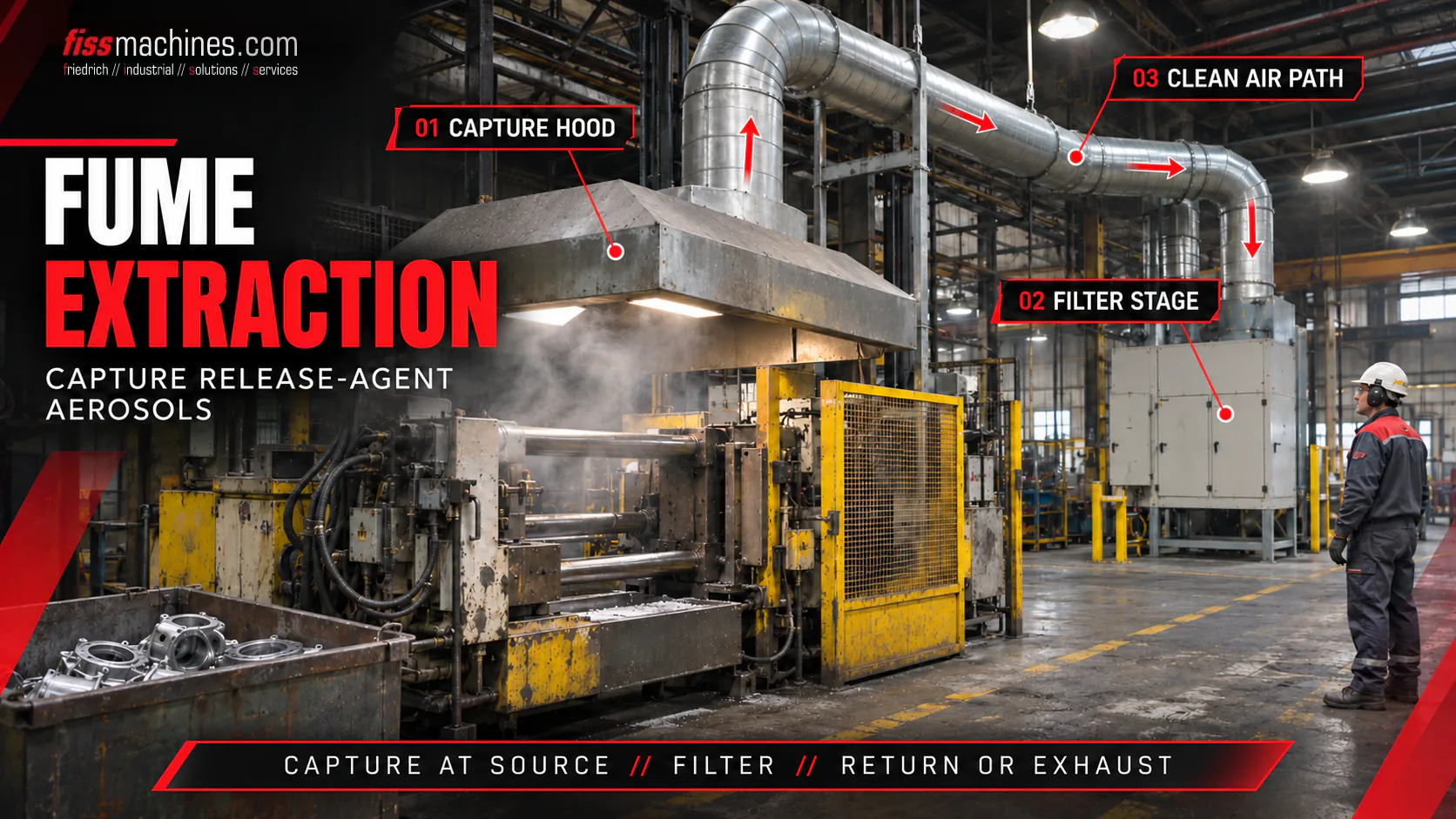
Fume Extraction in Die Casting: Release Agent Aerosols, Capture Hoods and Filters
10 novembre 2026
Knowledge
Every spraying cycle releases mist and smoke at the die casting machine. This article explains where the emissions come from, how hoods capture them and which filter technologies separate them.
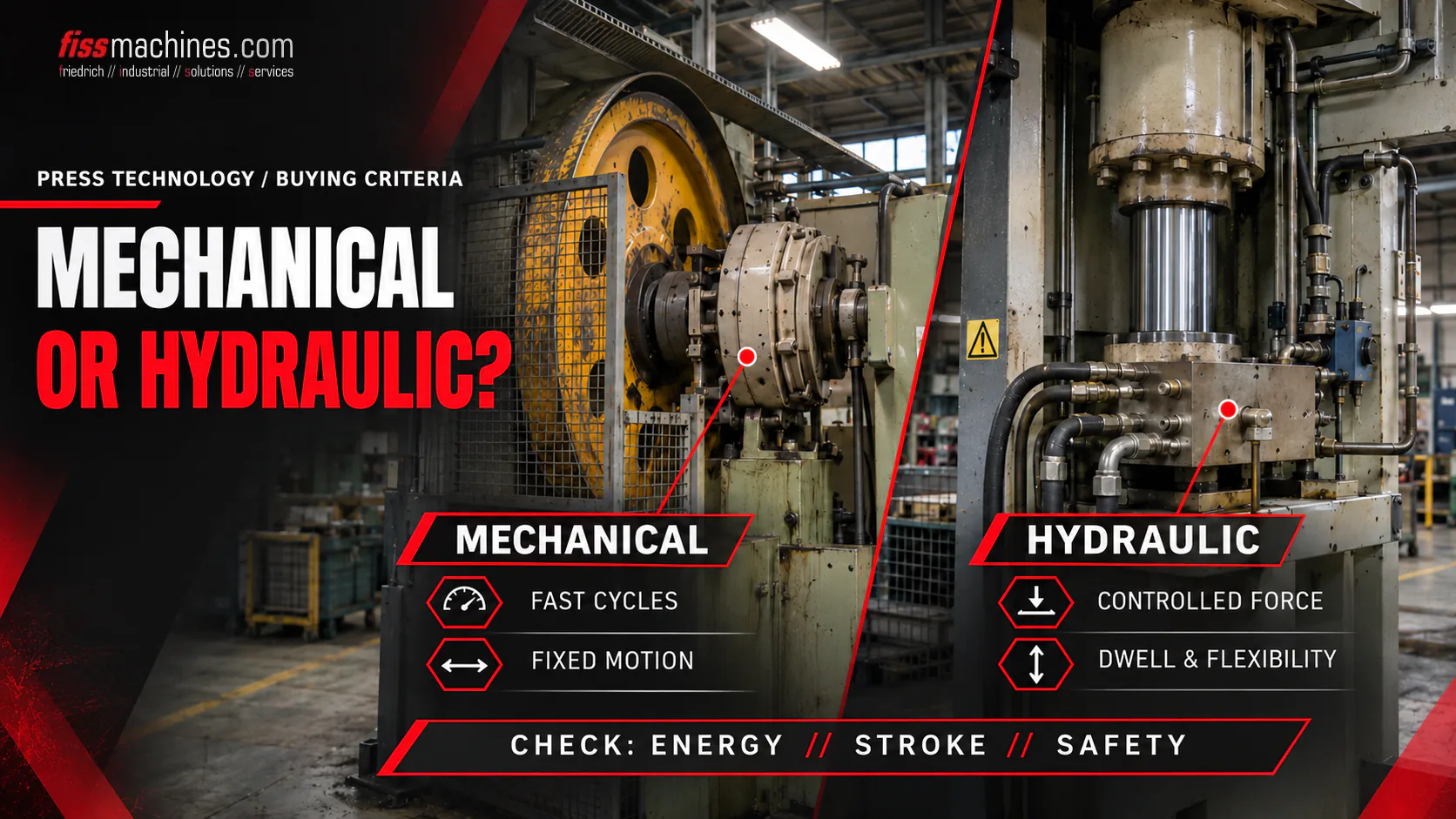
Mechanical or Hydraulic Press? Differences, Applications and Buying Criteria
9 novembre 2026
Knowledge
Crank, knuckle-joint, servo or hydraulic: the drive principle decides where a press delivers its force and how fast it runs. This article compares the drive types and shows what to check before buying a used press.
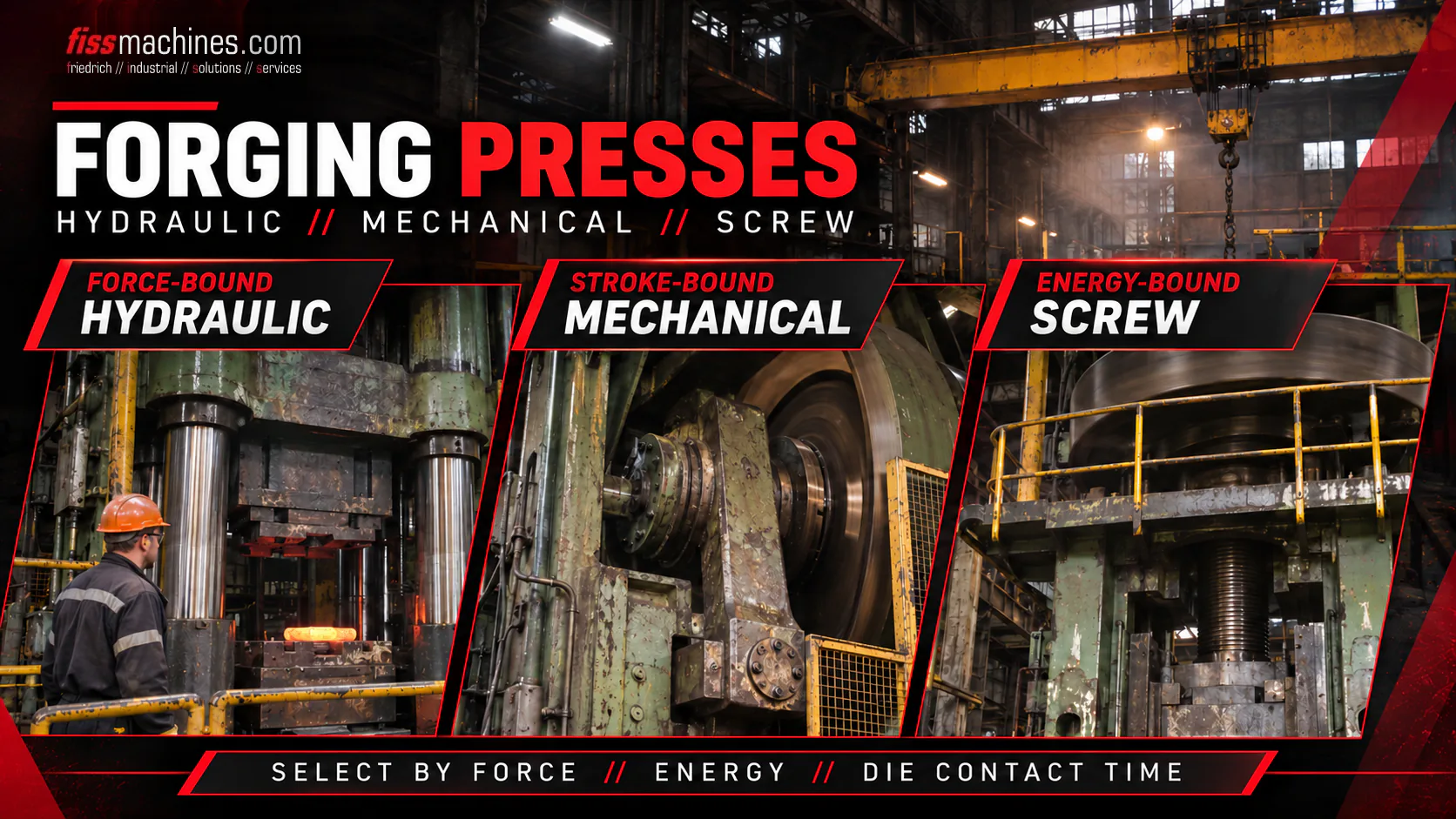
Forging Presses Explained: Hydraulic, Mechanical and Screw Presses Compared
8 novembre 2026
Knowledge
Hydraulic, mechanical or screw press? In forging, the machine principle decides contact time, die temperature and part accuracy. This article compares the types and shows what to check when sourcing a used forging press.
